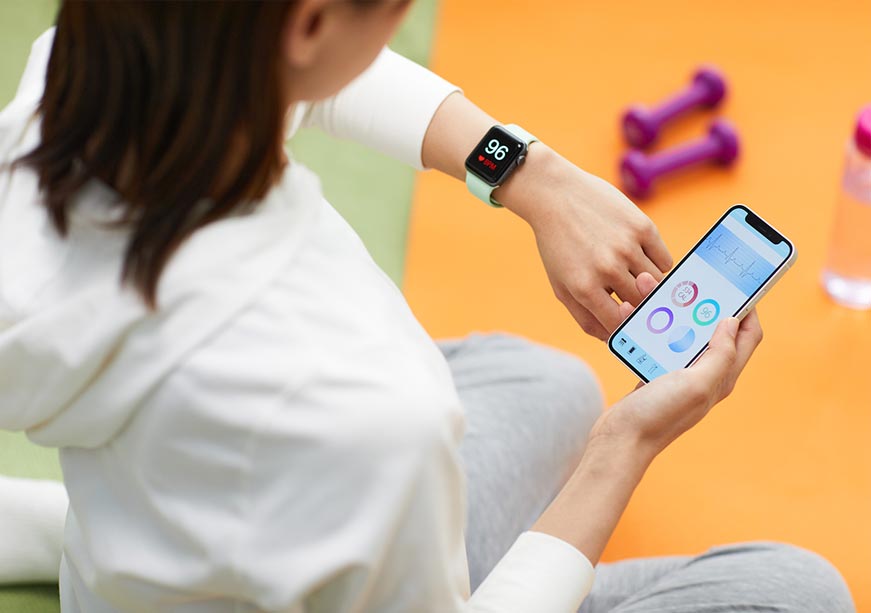
FemTech is no longer a niche corner of digital health. In 2026, it has become one of the fastest-growing areas in healthcare innovation, driven by larger markets, stronger investor interest, better technology, and a growing recognition that women’s health has been historically underserved.
The numbers alone explain part of the story. One market forecast estimates the global femtech market will grow from $66.37 billion in 2026 to $140.64 billion by 2035, while another source describes women’s health technology as one of the fastest-growing innovation segments worldwide. But the bigger reason for the boom is not just economics. It is that startups are finally building tools, clinics, diagnostics, and platforms for real health needs that were ignored, underfunded, or dismissed for decades.
FemTech, short for female technology, generally refers to products and services designed around women’s health. Early attention in the category focused heavily on period trackers and fertility apps, but that definition now feels outdated. In 2026, the sector includes fertility care, maternal health, menopause support, pelvic health, hormone monitoring, chronic disease management, mental health, diagnostics, telemedicine, wearables, and AI-powered health platforms.
One reason women’s health startups are booming is that the market opportunity is finally impossible to ignore. Women make most healthcare decisions in households, yet many conditions affecting them have long suffered from delayed diagnosis, thin research, fragmented treatment pathways, and poor digital support. This mismatch created a large, underserved customer base, and startups moved in faster than many traditional healthcare systems.
Another major driver is the maturation of the technology itself. A few years ago, many women’s health apps functioned mainly as logging tools. Today, the industry is shifting from simple tracking to prediction and intervention. World Health Expo notes that AI and machine learning are moving women’s health platforms from passive monitoring to proactive care, using wearable and symptom data to anticipate issues before symptoms fully appear. That shift matters because consumers and clinicians are more likely to value products that do more than collect data. They want tools that help detect risk, personalize guidance, and improve outcomes.
Artificial intelligence has become especially important in this transition. According to Precedence Research, AI is being used in healthcare apps for early detection, fertility forecasting, medical image analysis, and personalized recommendations. In practical terms, this means a FemTech product can now combine cycle data, sleep patterns, body temperature, heart rate variability, and symptom history to offer insights that feel more like a health assistant than a digital diary. That makes the category more useful, more defensible, and more appealing to investors.
Wearables are also pushing the sector forward. Precedence Research says wearable devices held an 80% revenue share of the femtech market in 2025, showing just how central connected devices have become to women’s health innovation. Smart rings, remote monitors, pelvic floor trainers, and app-connected sensors are transforming care from occasional checkups into continuous health management. This is especially valuable in areas like fertility, pregnancy, postpartum recovery, hormonal health, and menopause, where patterns over time matter more than single-point measurements.
The rise of menopause care is another powerful reason for the boom. For years, menopause was commercially overlooked even though it affects a massive global population. World Health Expo notes that by 2030, more than one billion women will be in perimenopause or menopause, and that this segment has evolved from symptom-logging tools into telehealth platforms, predictive care systems, and non-hormonal therapy offerings. Startups have recognized that menopause is not a side issue. It is a broad healthcare category with strong demand, recurring care needs, and a customer base willing to pay for support that feels personalized and stigma-free.
Maternal health is following a similar path. Remote monitoring technologies can now track blood pressure, glucose levels, stress markers, and other indicators during pregnancy and the postnatal period, helping identify conditions earlier and extending care beyond the clinic. This matters because pregnancy and postpartum care are often fragmented, with too many women receiving intensive attention during birth but inconsistent support before and after it. Startups are filling those gaps with digital monitoring, virtual care, and integrated services.
Fertility remains one of the best-known FemTech verticals, but even this area has become more sophisticated. Rather than offering basic ovulation calendars, companies are building platforms that combine hormonal data, clinical support, diagnostic testing, and AI-based cycle interpretation. World Health Expo highlights Natural Cycles as an example of a clinically recognized platform processing more than 20 million temperature readings per day, while Clue and Flo Health are using algorithms and symptom analysis to deepen personalization. Whether a person is trying to conceive, avoid pregnancy, or understand irregular cycles, the expectations have changed. Users now want medically credible tools, not just consumer wellness interfaces.
Investor behavior also helps explain why women’s health startups are booming in 2026. Funding activity has remained visible across the sector, with one January 2026 roundup reporting $314 million raised by femtech startups in a single month. Precedence Research also points to rising funding and investment as a core market driver, and highlights major financings such as Maven Clinic’s $125 million Series F in late 2024. Investors increasingly see women’s health not as a niche category but as a scalable healthcare infrastructure play.
That shift in investor perception is crucial. In the past, some venture capital firms treated women’s health as too narrow, too consumer-focused, or too difficult to scale. In 2026, the thesis looks different. FemTech startups now operate in telehealth, diagnostics, enterprise benefits, chronic care, digital therapeutics, and at-home testing. Those are categories investors already understand well. Once women’s health companies began showing that they could serve large populations with recurring revenue and clinically meaningful use cases, capital followed.
Another factor behind the boom is changing public awareness. Women’s health issues that were once treated as private discomforts or social taboos are now discussed more openly. Precedence Research notes that rising awareness, digital literacy, smartphone use, and internet access are all contributing to market expansion, especially in developing regions. That matters because awareness creates demand. Demand attracts founders. Founders attract capital. Capital accelerates products, distribution, and trust.
Geography is broadening, too. While North America remains the leading femtech market, the category is expanding across Europe, Asia-Pacific, Latin America, and the Middle East. Precedence Research says North America held 38.64% of global market share in 2025, while Asia-Pacific is expected to grow fastest. World Health Expo also points to growing momentum in emerging markets, noting projected annual growth in the MENA FemTech market and the role of the UAE as a regional hub for women’s health innovation. This geographic expansion helps explain why 2026 feels different from earlier cycles. The boom is no longer limited to a few startup ecosystems.
The startup landscape itself has also matured. Company lists for 2026 now span pelvic health, PCOS care, hormone tracking, diagnostics, telemedicine, fertility financing, and chronic gynecological care. That diversity is a sign of a healthy market. Booming sectors do not rely on one flagship app or one subcategory. They develop ecosystems. FemTech now looks more like an ecosystem than a trend.
Importantly, startups are winning because they are often solving coordination problems that traditional healthcare still handles poorly. Women’s health data is frequently fragmented across wearables, apps, lab portals, paper notes, and clinic systems. World Health Expo argues that unified platforms connecting wearable data, lab results, and clinical records are urgently needed. Startups are well positioned here because they can design around the full patient journey instead of one specialty silo.
There is also a strong cultural dimension to the boom. Many women are tired of being told that pain, exhaustion, hormonal disruption, pelvic symptoms, or postpartum struggles are simply “normal.” FemTech startups often build brands around validation as much as treatment. They name conditions clearly, explain symptoms, provide communities, and offer care pathways that feel more empathetic than traditional medical environments. That combination of clinical support and emotional intelligence can be a real competitive advantage in women’s health.
Still, the sector is not without challenges. Precedence Research warns that some femtech apps suffer from limited medical reliability, generalized predictions, and insufficient expert grounding. As the industry grows, credibility will matter more. Startups that can combine strong user experience with regulatory discipline, medical evidence, and secure data practices will likely outperform those built purely on branding or engagement metrics.
Data privacy is another issue. Women’s health information can be intensely personal, covering fertility intentions, pregnancy status, sexual health, hormonal symptoms, and mental health patterns. As companies collect richer data from apps and wearables, trust becomes essential. The next phase of FemTech growth will likely favor startups that are transparent about data use, careful with consent, and capable of integrating with clinical care without compromising user control.
Even with those risks, the overall momentum is strong because the underlying need is real. Women’s health has too many unmet needs, too much purchasing power, too much clinical importance, and too much technological potential to remain underbuilt. Startups in 2026 are succeeding because they are entering a field where demand has existed for years, but the tools finally became good enough, fundable enough, and scalable enough to meet it.
In many ways, FemTech is booming now because healthcare is catching up to reality. Women do not experience health in isolated categories. Hormones, metabolism, sleep, mental health, reproductive health, aging, and chronic disease all interact. The most promising startups in 2026 are building around that interconnected reality, using AI, wearables, telehealth, and integrated care models to make women’s health more continuous and personalized.
That is why the rise of FemTech matters beyond startup headlines. It signals a broader shift in healthcare priorities. What began as a category associated with cycle tracking is turning into a serious innovation layer across diagnostics, prevention, treatment, and long-term care. In 2026, women’s health startups are booming because they are addressing a neglected market with better tools, better timing, and a clearer understanding of what modern healthcare should look like.